Charlotte, NC.
The Queen City. North Carolina's largest city. The second-largest banking hub in the country. And one of the most searched real estate markets in the South.
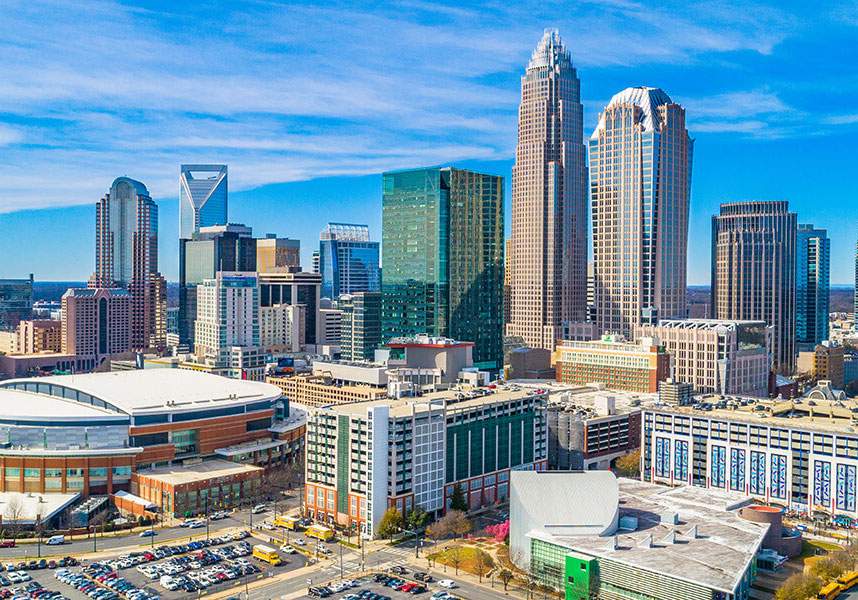 Charlotte
The Queen City. North Carolina's largest city. The second-largest banking hub in the country. And one of the most searched real estate markets in the South.
Charlotte
Charlotte is a city of nearly 1 million people in Mecklenburg County, sitting on the South Carolina border in the southwestern corner of the state. The metro population is pushing 2.7 million.
Bank of America, Wells Fargo, and Truist are headquartered here. Honeywell's North American headquarters is here. The tech sector has been growing steadily alongside the financial infrastructure that's been there for decades.
The job market is Charlotte's clearest selling point. If you're in finance, banking, tech, healthcare, or professional services, Charlotte gives you employer density and career infrastructure that most NC cities can't match. That's the primary driver of the inbound migration the city has seen and continues to see from the Northeast and elsewhere.
The city's growth has also produced real neighborhoods with real character. South End, built around the light rail corridor, is one of the more walkable, vibrant urban districts in the South — converted industrial buildings, restaurants, and a density that feels genuinely urban. Dilworth has tree-lined streets and historic homes. Myers Park is the city's most prestigious address — large estates, mature trees, and prices to match. NoDa (North Davidson) and Plaza Midwood attract buyers who want character, walkability, and a strong local arts and food scene. Ballantyne in the south is the family-friendly suburban option with strong schools and newer construction.
The Panthers play here. The Hornets play here. Charlotte Douglas International Airport is a major hub. The city has sports, entertainment, airport access, and a mass of employers that smaller NC cities simply don't have.
The median home price has been running around $427,000 depending on source and timing. Premium addresses push significantly higher — Myers Park estates routinely exceed $1M, South End condos and townhomes command urban premiums, and Dilworth has appreciated steadily. More affordable entry points sit in University City and East Charlotte, where homes can still be found in the $250,000–$350,000 range. Average two-bedroom rent runs about $1,700; South End and Uptown push toward $2,000 for a one-bedroom. Cost of living tracks roughly at the national average — meaningfully higher than most of the rest of NC.
South End — light rail access, dining, converted warehouses, real urban energy. Dilworth — character homes, sidewalks, near Freedom Park. Myers Park — the city's most prestigious address, large estates and top schools. NoDa & Plaza Midwood — artist energy, local restaurants, historic bungalows. Ballantyne — south Charlotte's polished suburban option with strong schools and newer construction. University City — more affordable, near UNC Charlotte, and well-positioned as the light rail extension brings more connectivity.
The city has been investing in transit but most of the metro requires driving for daily life. Factor commute logistics into your neighborhood decision early. The I-485 beltway and I-77 can both be genuinely difficult at peak — particularly for anyone commuting daily to a fixed location.
Homes have been selling in around 30–60 days on average depending on neighborhood and price point. Well-priced homes in desirable areas still move quickly and see multiple offers in active stretches.
Like the rest of NC, Charlotte closes through licensed attorneys, not title companies. The attorney reviews title, handles escrow, and records the deed — buyer-friendly in practice. The NC due diligence fee system also applies: a non-refundable fee paid directly to the seller, separate from earnest money held in escrow. Worth understanding before your first offer.
If your employer is anchored in Charlotte, this isn't for you. But if you're remote or flexible, Winston-Salem and Greensboro home prices run roughly $150,000–$180,000 below the Charlotte median. Triad commute times average under 20 minutes; the Triad has its own real job market in healthcare, aerospace, biomedical research, and education. Winston-Salem is 90 minutes from Charlotte if you need to go in periodically.
If you're weighing Charlotte against other options, I'm happy to walk you through the differences — on the phone, over coffee, or in person.