Johnson Street, High Point.
High Point's first historic district. Bungalows built in 1907, mature tree canopy, covered porches, and a close-knit community that's been here long enough to know itself.
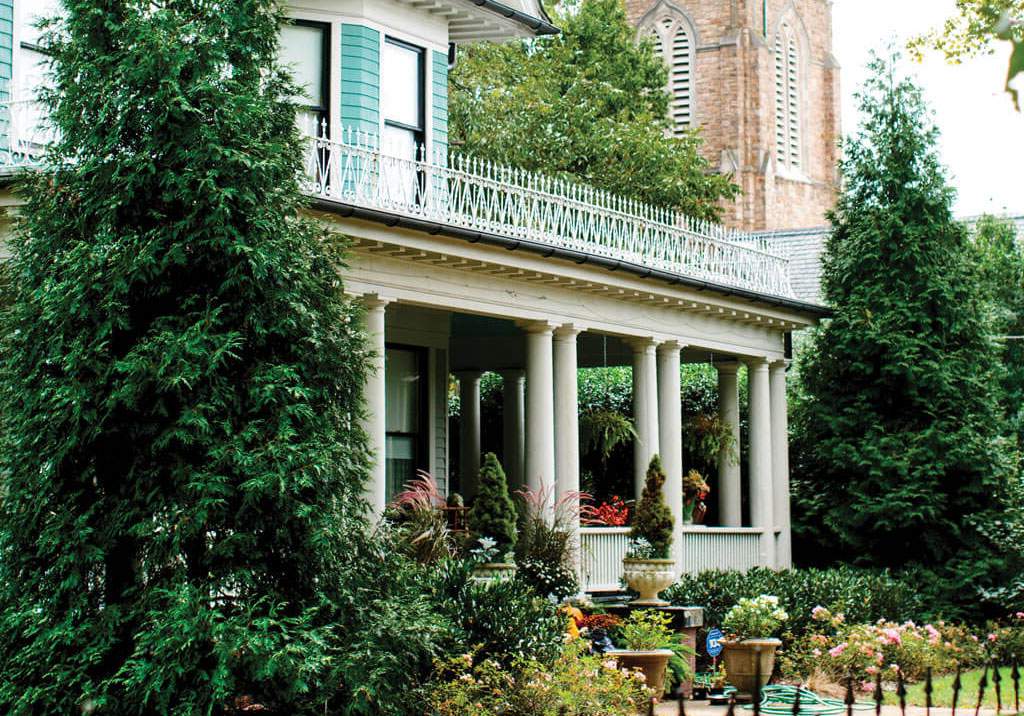 Johnson Street
High Point's first historic district. Bungalows built in 1907, mature tree canopy, covered porches, and a close-knit community that's been here long enough to know itself.
Johnson Street
The Johnson Street Historic District is High Point's oldest designated historic district and one of the best-preserved examples of early 20th-century residential architecture in the Piedmont Triad.
The district is compact: approximately 14 acres, 46 properties on both sides of Johnson Street running from East Parkway Avenue south to East Lexington Avenue. Four tree-lined blocks, all of them built between 1907 and the 1920s — when Johnson Street was the premier address for the furniture and hosiery industry executives who were building High Point into an economic force.
The homes reflect that era honestly. Craftsman bungalows, Four Square, Colonial, and Victorian styles, designed not by professional architects but by local contractors working from nationally published plans and refined with their owners. Ten-foot ceilings, original hardwood floors, front porches built to be used, and the kind of millwork that's simply not produced anymore at any price. The residents who built on Johnson Street in the 1910s included newspaper publishers, hospital founders, politicians, and civic leaders. The bones of the neighborhood carry that history without performing it.
Today the neighborhood reads as welcoming and close-knit in a way that larger neighborhoods rarely achieve. Mature trees form a canopy over the street and residents know each other. High Point University's investment in the surrounding neighborhood has brought new businesses, restaurants, and development nearby — the university's arts center is a short drive, and the social district along Main Street with Brown Truck Brewing and Sweet Old Bill's is within easy reach.
The neighborhood has parks, trails, and historic homes surrounded by cafes and restaurants — it functions like a small-scale version of what you'd find in Winston-Salem's West End or Greensboro's Fisher Park, but at price points those neighborhoods no longer offer.
The Johnson Street Historic District is locally designated, which means the city has a formal interest in preserving its character. That's good news for long-term neighborhood stability and architectural integrity. It also means significant exterior changes to contributing structures require review. If you're planning major renovations, understand the historic preservation guidelines before you buy. Your agent should walk you through this before you make an offer.
Homes over 100 years old are beautiful — they're also 100 years old. Electrical, plumbing, foundation, roofing — all of these need careful evaluation by a qualified inspector. The inspection guide on this site covers why this matters and what to look for. Read it before you tour Johnson Street.
Entry-level bungalows in comparable historic districts in Winston-Salem or Greensboro have appreciated to the point where many buyers are priced out. Johnson Street offers that same architectural character and community feel at a price point that still makes sense for buyers who move quickly. That window doesn't stay open indefinitely as more buyers figure this out.
The university's transformation of the adjacent area continues. New restaurants, businesses, and development have followed the university's footprint. For buyers thinking about the long arc of the neighborhood's trajectory, the university's presence and continued investment is a meaningful tailwind.
If you're considering Johnson Street and want to understand what buying a historic home in High Point actually involves — the process, the inspection priorities, the renovation considerations, and how it compares to other character neighborhoods in the Triad — reach out. Happy to walk through it honestly.